



Both...and forever
My brother Ken recently sent me a link to a devastating story about the recent decline of Harley Davidson. It described something more than a decline, a catastrophic collapse-in-progress of one of the worlds most well-known brands.
Another old riding friend of mine recently sent me a link (Thanks, Mark D!) to a popular vlogger’s video about how motorcycling is ending:
Bikes not selling, dealers closing, riders aging out, fewer young people getting into riding, etc. All the usual observations and laments. It is a well-done video which I scanned/watched with knowing interest. Aerostich is smaller than it was ten years ago, too, and we have a front row seat, but…
Although the vlogger who made this video is correct about how the motorcycling ‘culture’ we lived and enjoyed is currently in a moderately rapid decline, which there are many reasons for, what it misses is that over the next fifty years another motorcycle culture will very likely arise in its place. It probably won’t look much like the one most of us have experienced and enjoyed, though.
Predicting the shape of any future moto-culture isn’t something I’m any good at, but some clues are surrounding us already, including (but not limited to):
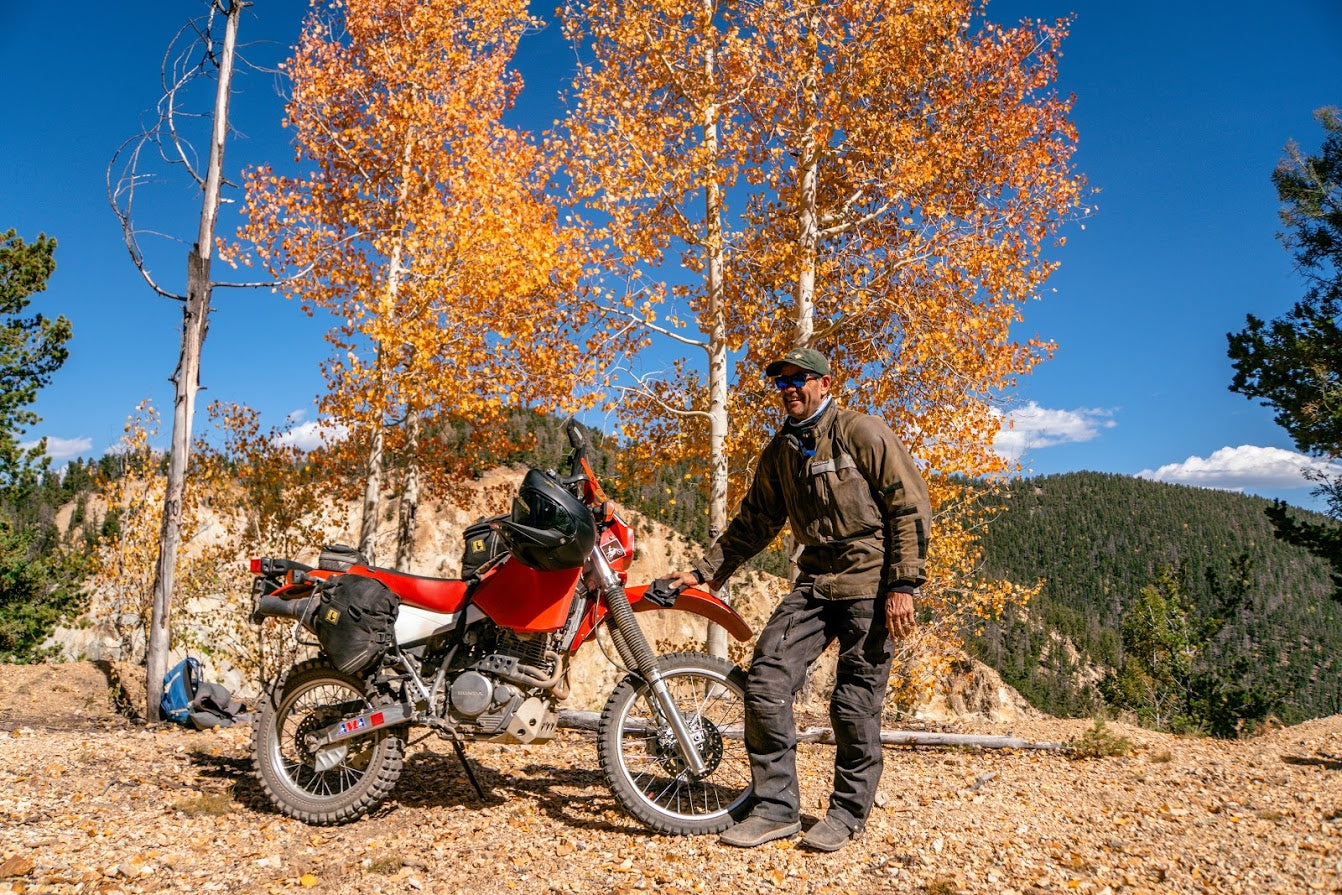
- Honda’s best-selling bike here in America last year and this year is the 300cc model which comes in three or four variations: A not Street legal dual sport play bike, and also as a fully street legal version.
- Kawasaki is selling more bikes in America than Honda this year. First time EVER. Hopeful Honda still has a bit of Mr. Honda’s famous ultra-competitive bad-ass DNA and this development will motivate the heck out the crew at Honda. Maybe even to the point of American Honda bringing back some kind of riff on the well-remembered “You Meet the Nicest People…” ad campaigns from the 1960s. The times we are living in today might be right for that kind of message, again. What was once old might become new again. Today’s version of their pioneering Cub is a truly wonderful machine.
- All the world’s motorcycle manufacturers are making and selling all-new models with very strong globally compliant ICE exhaust emission controls, anti-lock brake systems, etc. Even the smallest engine sizes and lowest-priced models like the Cub are being (or have already been) entirely redesigned to incorporate these technologies. Motorcycle makers would not be spending the large amounts of money to do all the re-engineering of even their lowest-end bikes for a future they don’t think will exist. They have what most people would call lots of real ‘skin in the game’.
- Automatic gearboxes, lighted control buttons on the handlebars, high-tech dashboards, easily rider-controllable performance features, and better engine management controls and amazing fuel economy are all coming on fast. Everywhere. Not to even mention electric powered motorcycles. The American electric bike specialist Zero just relocated their company’s HQ from Santa Cruiz California to somewhere in Europe because that’s now where the majority of their sales are.
- Suzuki just entirely redesigned their long-time best-selling DRZ 400cc models (there are two versions of this model) because this bike is: A) one of their most important core products, and B) it needs to be legally sellable in all markets world-wide. The top-to-bottom re-do involved meeting much stricter standards that what we have here in America. It meant fuel injection and a catalyst in the exhaust, and more. The new DRZ has the same HP as before, weighs a few lbs. (kg’s) more, and now can be sold worldwide. They would not have done all this, spending big money to do it, if they thought motorcycling was ever going away.
- Ebikes (electric-assist bicycles) are selling very well. They are not motorcycles, but they are important because they are an easy entry “gateway drug” for all riding, and more specifically for motorcycles. They are as beneficially-addictive as any motorcycle. Their plusses = lower cost, no licensing test, and no registration and insurance needed. Minuses = lower speeds, not being super compatible with auto traffic and range limited. After seven years my fairly crappy ebike has accumulated about 8,000 commuting and errand miles, five to ten miles at a time. If I wasn’t already a motorcyclist, I’d have become one by now.
Summary: There is a good future for motorcycling, in America and world-wide, and the very smartest people with the largest stakes in this future are betting serious money this will be so. I agree with them. They are the biggest stakeholders in motorcycling’s future. Selfishly, I also suspect this future may be slightly more in alignment with some core things we have always prioritized in Aerostich products and marketing narratives: Utility, usefulness, function, comfort, safety, long-term durability…
The future of motorcycling-in-general is brighter than ever. There are some very bright lights at the other end of the tunnel we are currently riding through. The celebrations of long-distance testosterone-fueled endurance riding and (similarly) the wonderfully popular sanitized simulations of ‘biker’ styles many of us have enjoyed for decades are super cool, but these moto-subcultures will probably continue to weaken because many younger potential-riders don’t find them as compelling as we did. The same can probably be said for the luxe touring segment and the high-tech ADV bike worlds. These areas of motorcycling will continue, of course, and I love them as much as anyone, but they may end up as smaller niches within a much larger expanding moto-culture universe, one which is just now on the cusp of being created by younger riders looking for coolness and relief from the omnipresent dullness and boringness of screens and sealed cars.
The mainstream of the future of motorcycling will not look like the past, stylistically, but riding and motorcycles are likely to continue being popular, so long as there are people and roads. And if I could snap my fingers, make a wish, and suddenly 90% of all single-person car drivers would actively be riding motorcycles, bicycle and scooters, instead of passively sitting inside their cars, almost everything about how humanity works would soon be a lot better. Less Alzheimer’s and dementia, less psychological and emotional problems, a lighter environmental and energy footprint on the planet, calmer, more alert, more happier and more co-operative people. Everywhere.
The historical accident of having 90% of the people across most of eastern Asia riding small motos, bicycles and scooters everywhere they needed to go in the decades after WW2 was the secret ingredient to how societies there functioned so well and grew so successful so rapidly, and how all this occurred under such a wide range of differing types of governments. After any society becomes wealthier, and you put everyone inside sealed cars and behind screens, with everyone thus being more generally alone and isolated from one another, and (importantly) more isolated from ‘nature’ (human and otherwise), that is when societies start to fall apart.
Riding is good for you. It is well worth its risks and minor discomforts.
Motorcycles, scooters and bicycles will always be bad-ass, and will always be tremendous fun, and will always be worth the challenges and risks, no matter what the styles and forms are. So six seven y’all and stay out of trouble.
- Mr. Subjective, Oct 2025


Well, let me chime in here. Confession I’m an addicted motorcyclist, probably over 70 years riding anything on two wheels and a motor. Started with a homemade mini-bike that a couple buddies pitched in and helped create. With near a half million miles of roadwork I have a feel for what’s happening. The “large” bike market has gotten terribly pricey out of reach for many. Younger riders just aren’t there as they once were. I’ve settled on what once was a Harley Sportster racking up over 400,000 miles in the last 25 years. I find that they work well for me, satisfying. Have traveled through 47 States and 5 Canadian provinces but health concerns are slowing me down.
I just wanted to add to the Harley concern, their quarterly reports have been horrible literally bleeding millions of dollars and terribly poor sales, not a good sign. Recent direction to restrict production and grossly inflate pricing did give them less horrible quarterly reports for a very short time. Part of the decision was near doubling the price of parts and accessories, which had been one of their strongest financial performing areas and again they had a short term influx before the greed caught up with them. A personal experience when replacing tires I wanted to add new wheel bearings to be proactive. I was once schooled that wheel bearings will feel good until they’re not. Aftermarket product cost about $20-25.00 a pair. Harley was getting $35-40.00 a pair for theirs. I was unable to secure new bearings on hand locally so a friend that was coming out from the city agreed too pick them up at the closest dealer to me. I prepaid for them on my card and didn’t think to check my pricing until a couple days later. $80.00, gasp, so I went down to have a conversation with the Parts Manager regarding the pricing error to no avail. He claimed the pricing was correct as there were two in the box of wheel bearings, when I pointed out the box was printed as containing a pair my argument fell on deaf ears.
And when a failing
company starts
selling off assets the hand writing is on the wall. Their Sportster was deemed unsalable in what was the near future do to increasingly more stringent emission regulations. They arranged a sale to ShinRay, a Chinese company, $150 million for their Sportster, which included blueprints and the assembly line. Keep in mind that the Sportster was still giving them profit. ShinRaythen contracted with SWN, an Italian Manufacturer to produce the 1200 Stormbreaker, a Sportster clone. Not presently for sale in the U.S.A. but they reduced the compression ratio from 9.7:1 down to 9:1 and apparently meet Euro5. Secondly more recent is the sale of a huge amount of Harley’s financial paper. When a failing company starts selling off assets then the hand writing is on the wall. Just food for thought as it saddens me that a company so iconic to America can allow their demise through poor upper management decisions, sigh.
When discussing this subject, concerning the decline of motorcycling’s current appeal I like to refer to a quote from that crusty motorcycling journalist Mr. John Ulrich, which I will try to paraphrase.
“ Today’s generations idea of taking a risk, is eating in a restaurant that hasn’t been reviewed.”
That nailed it for me.
I can think of no better explanation regarding the profound differences in our WW 2 generation and today’s was voiced by motojournalist and lifelong road racer John Ulrich.
And I paraphrase “Today’s generation’s idea of taking a risk is eating in a restaurant that has not been reviewed.”
Kind of nailed it for me…..
six seven back to you. Nobody knows what it means, but it means something. Good to read your evaluation of the market today. Plenty of fun yet to be had — I rode around the big lake this year with my Aerostich gear on. Let’s go !
Be careful what you wish for, usually the “light at the end of the tunnel” is a train coming at you leaving no escape routes. An ebike industry rag reported that “90 percent of eBike owners and interested consumers are 45 years old or older.” Around here, that’s “conservative,” at best. I know a fair number of much younger ebike riders, including my grandson who commutes 15 miles a day, year around in Minneapolis, on his ebike. None of them even consider motorcycles “vehicles” and it’s largely because the motorcyclists they see (and hear) are noisy, old, ridiculous, and largely assholes. You do not meet the nicest people on a Hardly and that is, overwhelmingly, the majority of the attention motorcycles get.
A friend, about 10 years younger than me, is probably on his last bike and he commented on how hard it is to find a Suzuki dealer (his bike brand) in New Mexico where he lives and anywhere between there and the west coast or Minnesota, when he visits me. Our one-and-only motorcycle dealer currently has 4 bikes in stock, one used and three 2024 models, across the three brands they supposedly represent. Their Rochester store no longer carries any motorcycles in stock. A few years ago, the owner told me that, when Honda, Suzuki, and Yamaha threatened to pull their dealership unless he bought more inventory, he told them, “Who will that inconvenience?” They withdrew their idle threat.
Zero leaving California for Europe says all there is to say about motorcycling here. During the Great Recession, Honda’s US sales fell almost 50% and that had a less than 3% effect on their overall motorcycle sales. We don’t matter anymore and, when Trump gets through with Putin’s plan for the US, we’ll matter a lot less globally, let alone to the motorcycle manufacturers. I think we’re seeing the end of an era for motorcycles in the US and that is the least of our problems.
Leave a comment