


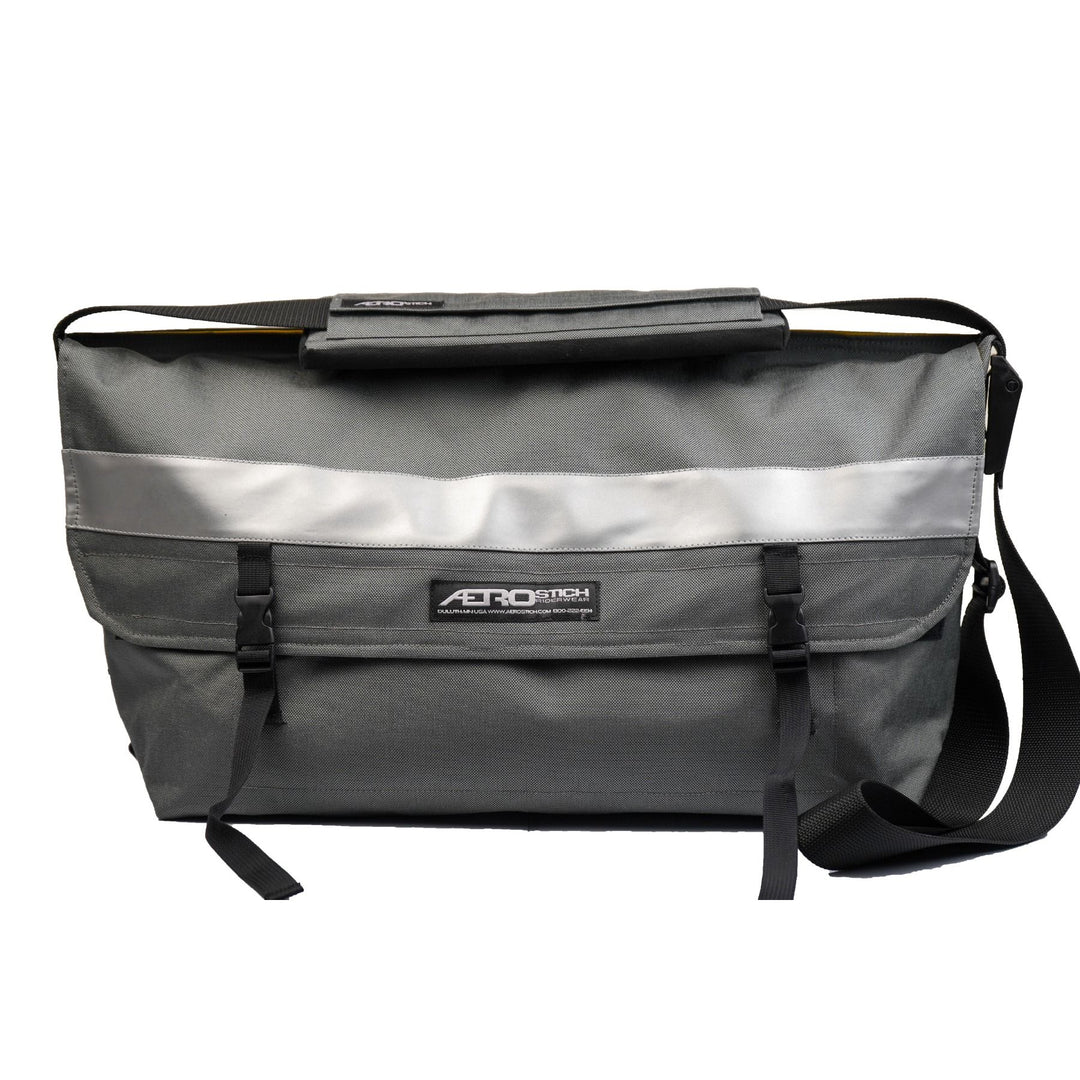


I wish I'd made this investment years ago. Weather protection is excellent and donning and doffing couldn't be easier. Will definitely spend more time on the bike!

Popular Picks
Time-tested, all-weather riding suits, jackets, and pants.

The Key to Performance Gear is Fit
Aerostich Suits Come in 61 Sizes
In professional size grading, 'Large' splits into six sizes: 42S, 42R, 42L, 44S, 44R, and 44L. These more precise gradings offer a better fit than the usual 'S', 'M', or 'L'. Investing in gear to use for thousands of miles (and years) is only worth it if it fits. So, if you ride 3,000+ miles yearly, a graded fit ensures more comfort, safety, and performance.

No B.S. Glamour Marketing
The Difference is in the Details
In addition to having over sixty different sizes of riding suits in stock, Aerostich gear also has:
- The easiest to use and most functional pocket arrangements.
- The largest areas of reflective material.
- The most adjustable waterproof cooling and venting zippers.
- The largest, thickest and most energy-absorbing TF impact armor.
All since 1983.
Rider Favorites
Product Highlight

Commuter Essentials

The Original Modern Messenger Bags
Handcrafted in the United States, our bags remain the strongest, most comfortable, most versatile, and most durable messenger bags available. Also available in Letter, Dispatch, and Parcel sizes.
The 3rd Generation Roadcrafter Suit
You'll enjoy its higher levels of performance, comfort, and protection on every ride.
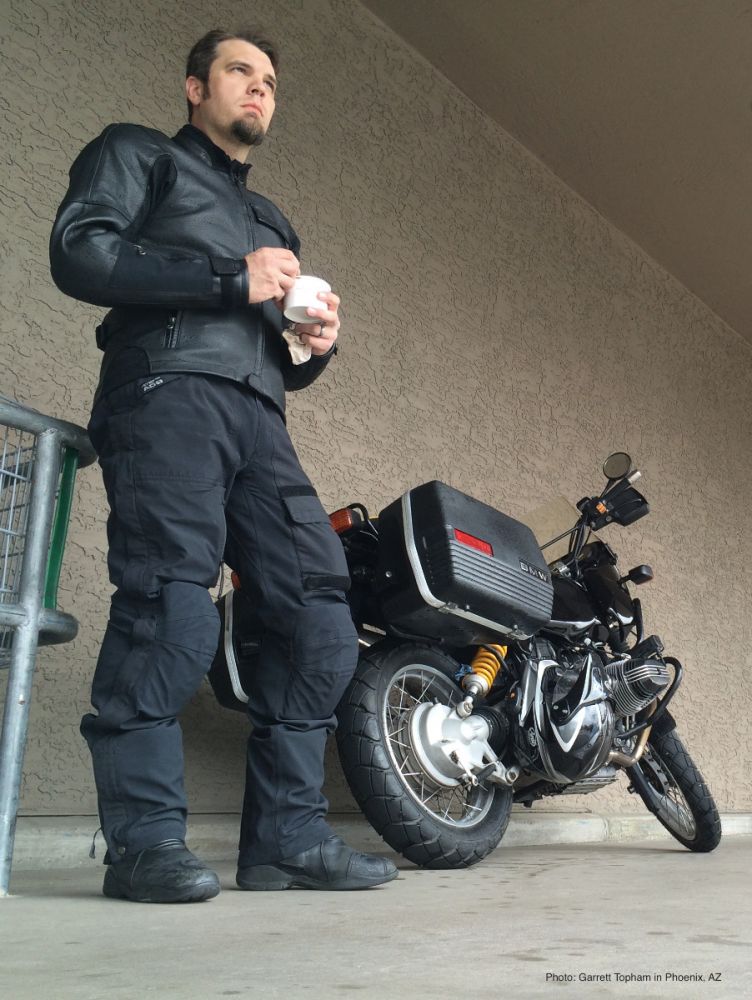
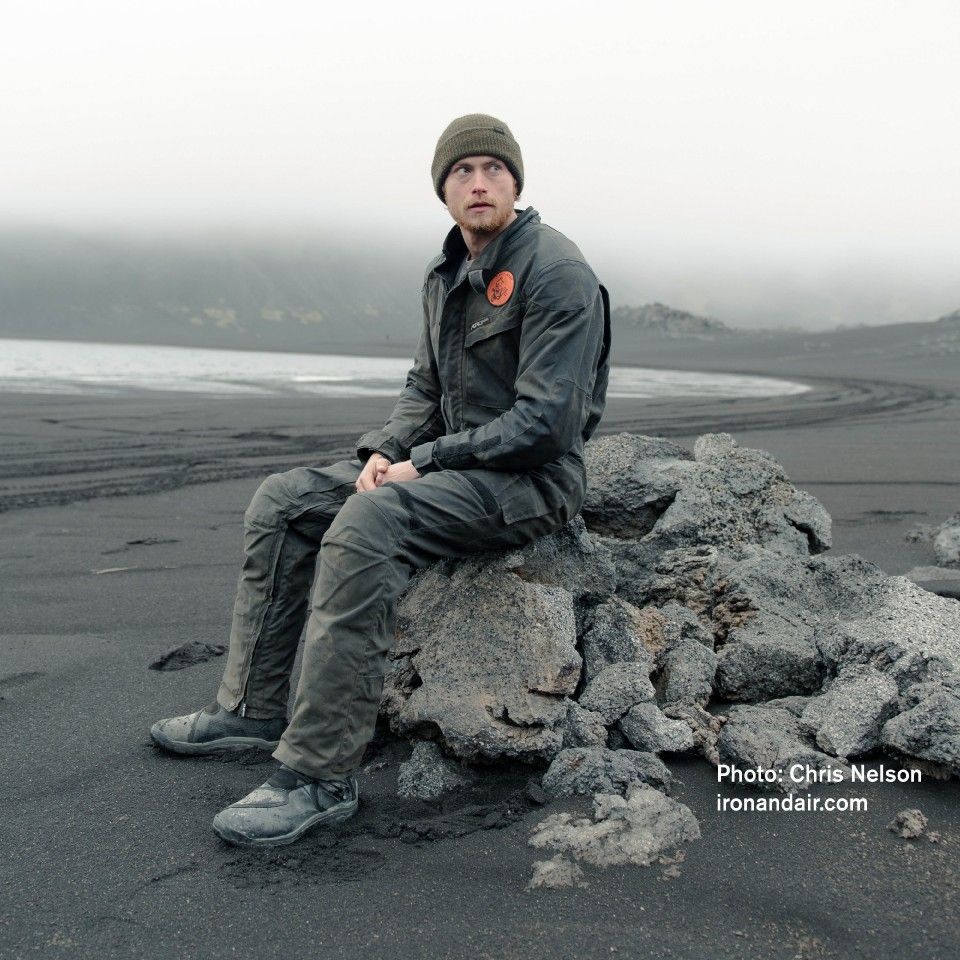
9 Years Later

New

On the Blog ...

Urban-ality, Suburban-ality; They Didn't See You; Motor Skills
on Oct 07 2026
12
PART 1:
Urban-ality, Suburban-ality
And, as Usual, Motos
Suburban infrastructure development sped up during the late 1940’s as many more people began to own automobiles. Back then most post-WW2 returning soldiers and young-adults-in-general wanted a peaceful life with the promise of a safe, calm, quiet home and at least a small a back yard for the kids to play in, hopefully also with a patio having enough space for a grill, a table and a couple of chaise loungers under a sun umbrella. A suburban Shangri-la.
Twenty years later many of the children who’d been raised in these bucolically boring places found them (and their similarly boring ‘greatest generation’ parents) a bit too dull and predictable. They wanted something different for themselves as they began moving into adulthood. Along their way through adolescence one of the things some boomer-teens found and liked was motorcycles, many of which were affordable and (cough…cough…) newly reliable.
Riding a motorcycle for sport, fun, and for going off to explore America became a thing. For thirty years from the 1970s through the 2000s millions of riders were exploring backroads on bikes loaded up with camping equipment, while others were club road racing sportbikes or stripped-down dirtbikes. It was a true golden age for recreational and sport motorcycling in America. Millions more also just rode around locally, simply because it felt good and looked cool. Bikes figured prominently in mainstream culture and were often used as aspirational props in advertising, in many movies, and on television.
Enter Aerostich. Specifically, we pioneered new kinds of rider’s gear to help make using motorcycles a little more comfortable and safer, especially in crummy weather. To help make riding a little better and easier. During this same time dozens of other moto-centric small businesses provided everything else needed to make bikes better looking, better handling, more capable, and (of course) a little faster. Some of them, like us, are still around today.
Motorcycles have long been a slightly impractical way for some riding-inclined folks to reconcile their personal mobility requirements with the boring banality of much of today’s built-out postwar infrastructure: Sprawled out acres of strip malls and shopping centers, and of endless suburbs with sharply edged lawns fronting curving side streets, etc.
It’s all very comfortable, safe and convenient, but also oh so very boring. I’ve come to believe a challenging, textured life is better for a person in multiple holistically prescriptive, prophylactic ways. So instead of driving a car nearly everywhere I choose to motorcycle or bicycle every chance I get. For me it’s simply more enjoyable to get from A to B riding a bicycle or motorcycle. And this is so regardless of weather. Riding simply helps me feel better, and having decent gear makes doing this a lot easier.
There is not much else to write about this. It’s perfectly fine with me if other riders work to curate for themselves only the most optimal riding experiences. Good for them, and I mean it. But even riding through moderately bad weather makes sense to me. Yes, it can be less comfortable and is sometimes a bit riskier, and riding in adverse conditions is always ostracizing, and I never specifically seek it out, yet I still do it.
I know this makes me weird.
Lastly, if you are experiencing emotional or psychological problems, and you happen to have a reasonable working motorcycle, and you are physically able to ride, you might want to go riding for a while.
- Mr. Subjective, May 2026
PS – Even on those perfect summer days a boring back yard with a patio and a grill, or even a small deck off an apartment, is wonderful to be able to come home to. Especially after riding a few miles to get there.
---------
PART 2:
They Didn’t See You
Wanna cut your riding crash-injury risk in half? About 50% of all two-vehicle accidents involving a motorcycle are due to a car or truck driver pulling out of a side road or driveway, or turning left from the opposite lane, directly into the path of an oncoming rider at exactly the wrong time. 100% of them will later say “I didn’t see you.” They did not, and if you require a deeper dive there have been decades of careful academic research on this which you can find with little difficulty.
Separately, the largest cause of single vehicle crash injuries involving motorcycle riders is simply riding off the road in a curve and then hitting something solid which does not move. The solution? Learn how to ride a little better. There are many ways to accomplish that, from experimenting carefully in a parking lot to learn your and your bike’s limits, to taking MSF and similar skill-building classes, to spending a day at an elite track school.
What can you do about the “…didn’t see you” car-motorcycle crashes? The easiest and least complicated way is to dress so you are easier to see. Wear white, yellow, blaze orange, and hi-viz helmets and gear. These all make a well documented statistically measurable difference. And after such gear has a few thousand miles of wear and little patina, you won’t look overly goofy, either. If you enjoy your riding enough to do it frequently, the bright gear fashion sacrifice is well worth it. Obvious side note: If your bike is unfaired and ‘naked’, bright gear will be more easily noticed by oncoming and side road traffic than it would otherwise be if you ride behind a large windshield or fairing.
You can also do something to improve your forward-projecting lighting to help make your bike much more noticeable to drivers just ahead. Start with a brighter headlight, but don’t go overboard or you’ll just irritate more than a few of them. Also, kits which make your headlight flash like it’s some kind of emergency-responder vehicle are available, but they’ll be even more irritating, so don’t be tempted.
Adding a small running light seems a good option. I like to install a single smallish driving light in an asymmetric position near the bike’s main headlight. This means the 10, 2 or 4 (analog clock) locations, not the more symmetrical positions at 12, 3 or 6. A cattywampus arrangement looks a little strange, but when it comes to conspicuity this is a good thing. It’s always good to do something a little different whenever one is trying to attract someone’s attention. We all tend to notice the unusual. Everything anomalous stands out better. Drivers notice sidecars much better than motorcycles for that reason.
Since a picture is worth 1,000 words, here are photos of four bikes I’ve done this to. The oldest one is a 35-watt halogen on the BMW airhead. It came from a neighborhood auto parts store. The three newer ones are generic LED driving lights which also came from some local store. All were low enough draw to be simply wired through switches rated to handle the electrical load without a relay. So simple even a dummy like me could figure out the wiring how-to.
2006 Suzuki DRZ 400E – In addition to improving conspicuity, this little LED driving light supplements an aftermarket LED headlight. It is wired though a circuit which allows me to use it after the bike has been keyed off, which is handy for setting up a campsite after dark. Relative to the main headlight it is positioned at about 1:30PM. During daylight hours I must remember to turn it off after arriving somewhere, but it’s surprising how long it can be left on without running the battery down too much.
1994 Honda XR650L - The low beam of the aftermarket main headlight is two small LED lights (emitters?) beside the central LED high beam. I’ve used a clear silicone adhesive to add an orange acrylic rectangle directly in front of one of the low beam LEDs. From left to right oncoming drivers see the four-LED driving light (directly below the right turn signal), the orange low-beam LED and the white low-beam LED. All three lights combine to look weirdly unusual and hopefully make this bike more noticeable to oncoming traffic. There’s no switch on the added driving light. It is wired to come on and go off with the headlight.
1981 BMW R80GS – This 35-watt halogen light was added long before LED lights were available. It came from an auto parts store and attaches to a clamp-on aluminum bracket added to the left fork tube. On top of its ball shape is a simple on/off toggle switch from a hardware store.
2007 BMW R1200R – This small 3-LED driving light is mounted to the plastic headlight support at about the 1:30 PM position relative to the headlight. It is powered from wires connected to the back side of this bike’s built-in accessory outlet, then run through a hardware store on/off toggle switch located next to the left handgrip. Whenever the bike is running the accessory outlet is powered. After the bike is keyed off, it remains powered for about fifteen minutes then automatically shuts down. This allows the driving light to be useful for setting up a campsite after dark.
- Mr. Subjective, Dec 2020
---------
PART 3:
Motor Skills
The Life-Long Satisfactions of Acquiring Better Ownership of Your Environment
“Each September at the Montessori school I run, the preschoolers engage in an elaborate after-lunch cleanup routine. They bustle through the room with sweepers and tiny dustpans, spreading crumbs all over the floor and making a bigger mess than they started with. If any scraps do make it into their dustpans, most of them spill out as the children exuberantly walk to the trash bin.
"It would be faster and neater to simply let the teachers do all the tidying up. But our goal is more than achieving a spotless classroom; it’s also helping children develop motor skills, responsibility, confidence, and the ability to clean effectively on their own. Sure enough, by December, the children’s sweeping efforts become more refined. By springtime, if not earlier, they start to pick up other messes throughout the day without a teacher’s prompting. They haven’t just learned to mop and scrub; they’ve taken ownership over their environment.”
- By Christine Carrig in The Atlantic, July 21, 2025, The Mistake Parents Make With Chores. This article was featured in the One Story to Read Today newsletter. Sign up for it here.
The satisfaction of developing and sharpening motor skills is an important part of the inherent appeal of learning how to ride a motorcycle. Learning how to accomplish new things can be difficult, but after a new skill is mastered, it becomes satisfying and happiness-generating. The same is so for learning new thinking and analyzing skills.
Riding a motorcycle gives us both gifts. Physically, handling the machine through an endless variety of situations (traffic, infrastructure, terrain, and weather) is one part. Usefully ‘reading’ and analyzing developing traffic and other environmental situations skillfully and accurately is the other. Using these linked areas of real-time riding skill well is a life-long happiness-generator.
Because technology helps us accomplish things and accomplishing things makes us happy, technology-in-general is highly ‘marketable’. We work hard to create, possess and utilize technology. Including motorcycles. Learning provides the same accomplishing-happiness result as a physical accomplishment does. Loving and being loved are important additional kinds of emotional accomplishments. Until generative A.I. arrived, technological enhancements in our ability to accomplish things involved simple amplifications of our mental, emotional and physical abilities.
From the first stone axe and wooden spear to the latest recursive-learning A.I., all new technology is societally disruptive. The more useful, important, popular and pervasive the technology, the more disruptive it is. For every benefit a new technology provides there are always attached penalties, unintended consequences or unanticipated downsides.
It seems possible A.I. may become such a broadly useful technology its disruptions and downsides could be wide enough to cause some individuals to leave mainstream society, as Amish/Hutterite/Mennonite/Morman/Jehovah’s Witness faith-based conditionally structured communities have all successfully done to various degrees. Today it’s easy to imagine a future community built around accepting most or all of today’s technological advances, including digital non-A.I. computers, and motorcycles, while rejecting those mental/psychological/neurological/emotional simulacrum technologies like generative A.I.
I like riding motorcycles, hand washing dishes, pedaling bicycles, camping out, taking walks and fixing things with hand tools. I also like using a personal computer. When I don’t get a regular dose of these kinds of accomplishment-experiences, I feel a bit lost. Similarly, I’m always happy after successfully learning or discovering a new idea or reasoning out a new solution to something I’d been wondering about. This includes difficult spiritual/emotional/psychological questions.
All technologies so far, except generative A.I., feel wonderful to be able to skillfully use, but the earlier manual version of most technologies can also be roughly as satisfying and happiness-generating -- if one has the time and if a situation allows. Henry David Thoreau famously said (and wrote down) the folk wisdom about how "chopping wood warms you twice." It sure does. Choosing to ride a motorcycle, scooter or bicycle, instead of taking a bus or driving a car, works similarly on whatever is inside of us.
Is it possible today’s societally higher incidences of psychological, neurological and emotional illnesses, and of certain chronic physical medical conditions, and of the diverse examples of increasing societal unrest in rich and advanced areas, are all at least partly caused by technology doing some things for us we should be doing ourselves?
How might one decide what technologies to adopt, and which to take a pass on? Automobile cruise control, self-steering lane assist and smooth super-slab freeways? Absolutely. But whenever possible I’ll still choose a backroad aboard a motorcycle with traditional manual controls. My preference does not make it correct for you, or for anyone else.
Generative A.I. is coming toward all of us like a hurricane and is about to better-automate and better-simulate how we feel and think. I don’t see how we can stop it, or even effectively regulate it. I’m not smart enough to know if we even should try. But clearly there is a dark side to this technology, as there has been with all the technologies we’ve ever previously adopted to augment our mental, emotional and physical capabilities. The ancient Greeks had a nice story about Icarius. He wanted to fly to the sun. It ended badly. And maybe there’s more to Harry Calahan’s scripted line: “A man’s gotta know his limitations.” from the old Clint Eastwood movie ‘Dirty Harry’.
Walk, skate, pedal or ride a motorcycle as much as you can, and drive whenever you need or want to. Just please be careful with generative A.I. should you happen to be directly involved in developing, spreading and supporting it. Have you ever considered motorcycle riding? (We’d be happy to help.)
- Mr. Subjective, Sept 2025

on Sep 15 2026
11
Ride More, No Nonsense.
Sometimes dedicated long-time recreational and amateur competition motorcyclists decide to change their relationship with riding. They’ll decide to ride even more days than they already do. For reasons they probably don’t fully understand themselves, and may not even be fully aware of, riding mostly on weekends and on wonderful warm summer evenings becomes not enough. Somehow, without quite realizing it, they sort of slip off motorcycling’s deep end.
This happened to me, and I still don’t exactly know how or why.
Sometimes, young riders begin riding for transportation to their first job, or to high school. Others start such utility transportation riding later in life, sometimes much later. Still others may enjoy riding for a year or two until ‘life’ happens to them (job/wife/kid/money/etc) and this brings a halt to their riding, but years later they take it up again.
Still others ride to experience the challenges and fun of amateur club racing and/or other organized riding events: Ironbutt endurance riding programs. Roadracing, enduro, motocross, trials and hare-scramble events. Or BDR (Backcountry Discover Route) rides and events such as formally organized brand-affinity club rallies. There are also social media organized ‘flashmob’ rides and gatherings. And one-of-a-kind events like for example the annual ‘Slimy Crud Run’ in Wisconsin, and ‘Sturgis’. And there’s also those ‘Distinguished Gentlemen’s Rides’ all over the country. There are rides for women, and rides in support of all kinds of worthy charities. The list of organized ways to spend more time enjoying riding amongst groups of like-minded souls is nearly endless. Most of these ways to enjoy riding are at least partly social. Life is meant to be shared.
Others figure out more solitary ways to ride more. I’ve known many riders who’ve paired up with a riding buddy or two, or a spouse, parent or child, to simply enjoy more riding experiences unattached to any formal program or organization. Finally, depending on one’s life-situation and circumstances, there are those who mostly ride alone, partly for the benefits of solitude, and partly because they simply like doing it in ways words cannot easily explain.
Last and not least, some end up riding for daily utility transportation and commuting, either out of necessity or choice. In many locations and situations, this type of riding is a practical and economical way of putting motorcycling into many more days of one’s life. And in the parts of the world now filled with comfortable, efficient, convenient and safe automobiles, it’s also a way to slip a bit off the deep end.
Such riders are peculiar people. Not anti-social. Not with a death-wish. Not even quirky. Just mildly odd. Every time I look in a mirror now, one of those people is staring back at me.
All the above-listed types of riding expansions have in common is a requirement for more rider’s gear, and sometimes also, uh…more motorcycles. There’s no getting around it - an expanded quiver of gear (and motorcycles) directly enables one to ride a lot more. I’ve known riders who’ve gone through their riding in stages, starting as a new occasional rider and culminating as a life-long near-daily rider with a huge assortment of gear.
Here is a photo of my own quiver-of-riding gear. It’s been the same mix of items for about the past fifteen years, and it all hangs from a two-foot-bar in the corner of the basement of my home, near the door into the garage. Before I lived here it all hung from a water pipe suspended across the ceiling of the garage, but it could just as easily have been inside a hall closet, or anywhere else. These basement and garage locations were just the most convenient locations for all this stuff.
Nearby all the hanging gear is a set of small shelves with a couple of helmets (a modular and a jet/open face), half a dozen pairs of gloves, a plastic sandwich bag full of ear plugs, a pair of triple digit glove rain covers and some helmet and face shield cleaning items. Over by the door to the garage (not shown) are two pairs of riding boots: one ankle-high for daily transportation riding and the other calf-high for all-day and multi-day travels. Nearby there’s also a small bin with a few items which sometimes are taken along on day rides and multi day trips. For example, an Aerostich Kanetsu electric bib.
------------------
The ‘complete’ Mr. Subjective Gear Quiver, from left to right:
Black R-3 Light Tactical, size 42RNotes: Daily transportation and commuting from April - November
Black R-3 Light Tactical, size 44R with optional alterations: Shorter sleeves and legs, side gussets. Lots of room for mid-layering.Notes: Daily transportation from December thru April
Hooded down ‘puffy’Notes: Trips and daily riding, year-around
Non-hooded down ‘puffy’Notes: Worn in combination with hooded ‘puffy’, or alone, year around (packed for trips also)
AD-1 Light pantsNotes: All day and multi-day rides, April to October
Leather Transit Jacket (hi viz):Notes: All day and multi-day rides, April to October
Darien Light Jacket (hi viz):Notes: All day and multi day rides, April to October
Parcel Bag, Cargo Bag:Notes: Occasional Daily transportation cargo use as need
The cost of acquiring all this stuff all at once would be huge. It took me maybe thirty years to assemble this quiver, so the investment was both subsidized and incremental. After the bar was filled out, which was about fifteen years ago, it has not changed. Not at all. All this boring old gear still works perfectly, and to my eye it looks ok, too, maybe because it was never fashion-styled. Rather, it was made to be functional equipment. I know this for a fact because over the years, I’ve come to know its designer.
What all this means is this: Whenever I want to ride I pretty much always can. Weeks will go by without driving or riding in a car, year-round, and as a result, I’ve become a lousy driver. (Side note: I can still parallel park, though a bit slower and more cautiously now. Also, one key to enjoying trouble-free car ownership is to stay with mechanically and electronically simple cars, then drive them only very occasionally. Once every few weeks to help keep things lubricated, cobwebs from happening, and the battery charged. My car is twenty-plus years old and still works well. Not perfectly, but more than well enough.)
Executive summary…
Wanna ride more? Here is how:
Get a good-enough bike. Not too heavy or slow. Enjoyable and manageable.
Make sure it has everything it needs to operate reliably. Basically a good engine (or electric motor), a license plate, an insurance policy, and decent tires.
Begin assembling your own gear quiver. Take your time. You don’t need it all at once. Start with a good helmet, boots and a pair of gloves. Add jacket(s), suit(s) and all the rest later.
That’s all there is to it.
Compared to driving, and in most relative ways, riding is always better for you. It’s also better for the world. For maximum comfort and safety, it takes a quiver. Sorry.
- Mr. Subjective, May 2026
PS – The annual world-wide ‘Ride to Work Day’ comes up every year on the second Tuesday in June. Riders world-wide participate. It costs nothing. Ride that day, even if you don’t have a required commute, and if you really want to get fancy, call any local TV or radio station and let them know about it. Or post about it on social media. Makes a great local media story. More info is here. Mark your calendar now for next year’s day.

on Aug 18 2026
1
The more things change, the more they remain the same…
Today, on bike-urious.com:
Vs. back in the day (1988) in Cycle Canada magazine:

on Aug 06 2026
28
"Work, work, work, work."
Aerostich, this company, is forty-three years old this year. Considering the recent decline in the numbers of motorcyclists interested in longer-distance riding and touring, we are doing ok. After the Covid pandemic ended, most business things for us more-or-less stabilized and we’re optimistic about the future. And although nobody’s getting rich and we’re operating at a smaller scale compared with our 2007-8 peak, everyone here is getting paid in full and on time. This means all co-workers, vendors, lenders, tax collectors - everyone. We have much to be grateful for. So many wonderful customers first, and a solvent business with a small amount of savings for emergencies after that. For any small manufacturing enterprise here in America, this is something.
With a few exceptions (One lawyer, one doctor, a few salespeople, a consultant, a real-estate re-developer and a DJ.) most of my extended family are middle-class workers or small businesspeople. I’m the only clothing manufacturer. My grandparents and great-grandparents were all immigrants as small children or young adults. One became a scrap dealer. Another bought and sold cows and horses then later bought, sold and rebuilt worn out farm tractors. Another was a gourmet chef at some kind of fancy club or resort somewhere in the southwest before becoming my step-grandfather.
I grew up speaking only English, attended only public schools, and later graduated with a BA from the state university branch in my hometown. During childhood I received a small allowance and the occasional visit from a Tooth Fairy. I shoveled snow in the winter, mowed a lawn in the summer and went to weekly Friday evening congregational services with my young parents, and then to religious school the following morning. I rode a Huffy bicycle, my most prized possession, and was pretty good with a slingshot and a yoyo. I also was a mediocre Cub and Boy Scout and a so-so builder of tissue paper covered rubber-band powered balsa wood airplane models. I read Tom Swift and Hardy Boys novels and usually wore jeans and PF Fliers.
Religion played a larger part in the daily lives of my grandparents and their parents than it did in mine. Like me, they only spoke English, but their English was interspersed with occasional words and phrases from an old European language called Yiddish, which is a creole blending of German, Polish and Hebrew. All my ancestors had spoken it natively, but after they’d been here for a few years, they’d fully adopted English. None of them came to America with any wealth or little more than the clothes they were wearing, so everyone’s focus was narrowly about making a day-to-day living and assimilating.
My mother’s father was actually sent here by his father when he was only sixteen or seventeen, simply to see what kinds of opportunities there might be over here. European peasant families were large, and at the time America was still expanding westward and actively welcoming most immigrants. He’d come in through Ellis Island and after a few years working in NYC had acquired enough English to start heading west, first as a peddler selling from a wagon and going farm-to-farm, I think. After a few more years, he’d established himself well enough to take a wife. He was around thirty by then, and he was also able to help a sibling or two to come over to America. By the end of his life, he’d put four of his five kids through college and had established a successful auto parts store. His oldest son served in the U.S. Air Force.
My mother was an oldest child, and in 1938 she was ten years old when Kate Smith first sang ‘God Bless America’ on the CBS ‘Kate Smith Hour’ on her family’s console radio. She clearly remembered the moment all the rest of her life, of being with her parents in the living room of their modest home that evening. The reason she remembered it so strongly even though she was only ten is because her parents began crying as they were hearing it. The actual vintage radio performance is on YouTube right now, and if you have a couple of minutes and if you’ve never heard it, it’s still inspiring.
I’m not here to suggest what news anyone should watch, or which ‘influencers’ (if any…) are most worth anyone’s time. But I do think manufacturing most Aerostich items here in America is worthwhile and this partly labels me as a capitalist (and maybe also a fool, among other things), but for me such identifiers fall well behind the challenges of simply making a living. Of “Makhn a Lebn…” And this is the same today as it was for my ancestors, and hopefully it will be the same for my successors, and most, if not all, of my extended family’s descendants.
Recently, an interesting YouTube video, a short online essay, and a book about small-scale clothing manufacturing here in America all came to my attention at almost the exact same time, partly thanks to YouTube’s predictive algorithm, which constantly monitors everyone’s online viewing and entertainment preferences. Here are those three links with a brief synopsis of each. In no order of priority:
1.) American tools are worth it, every time. Confession…I’m a lifelong DIY amateur mechanic and household repair person. I like to fix things. Especially mechanical things. I can change tires, patch leaks, balance wheels, change motor oil, set valve clearances, disassemble, clean and reassemble parts, fix bicycles, tune, repair and maintain simple motorcycles, etc. I can even do a little light welding, cutting, filing, drilling, sanding, painting and fabricating. No one else in my birth family ever did any of these sorts of things. My tools are a disreputable random mix of old garage sale finds plus hardware, discount and auto parts store purchases, plus a few splurges like a couple of nicer quality torque wrenches. Still, I accept the point this essay makes that American-made tools are, in general, the best. And worth it.
2.) Manufacturing most physical things here in America has become extremely difficult to do profitably. This YouTube video is from a very popular series called ‘Smarter Every Day’. In this linked episode, the host-guy outlines the challenges he’s experienced and shares what he’s learned developing and producing a 100% made-in-USA BBQ grill scraper-brush, and it’s a story well worth watching. Goes a lot deeper than you’d expect.
3.) For more than thirty years, producing clothing in America has been one of the hardest things to do profitably. Production sewing businesses require skilled, talented, and hard-working cooperative human beings, not cutting-edge robotics. Cut-and-sew manufacturing operations can be located just about anywhere electricity, roads and people are present, and the output of such enterprises can easily be shipped trans-oceanic by air, or floated across oceans inside shipping containers. This book describes how a few companies (Aerostich is not mentioned) have managed to do it.
If you’ve purchased and experienced Aerostich gear in the past, and have liked it, and have had good customer experiences with our crew, please let riding friends who’ve never tried Aerostich know. We sell only factory direct, and all new customers receive free shipping for their first order. Finally, and last not least, if you enjoy your riding mostly for sport, fun, and recreation, it would be ok with me, assuming you are able, if you’d also consider giving commuting, general transportation and utility riding a try. Getting around this way involves a little more work than getting around by car, but after you’ve gotten used to doing it for a week or two, there’s a fair chance you’ll keep doing it and never look back. It’s that much more enjoyable. My old 650cc bike gets 45+ mpg, too, which is very nice. Key elements making this kind of riding easier, safer and better include:
Having enough good quality comfortable gear so you can ride in all weathers if you want to.
Having a lightweight easy-to-manage bike that is just a bit faster (whenever needed) than the traffic you’ll be surrounded by.
Not caring if it looks dirty and well-used (I last completely cleaned mine in 2024 when I needed to replace its stator, the part that makes electricity whenever the engine is running.)
Having a small or medium-size backpack or messenger bag so you don’t ever have to worry about something you bungeed on falling off without you noticing it.
Having a modular helmet so you can feel the wind on your face whenever you are riding down residential streets, and when you’re just stopping to fill the bike's gas tank. Or when sitting at a long stoplight waiting for it to change to green.
Having a mildly bemused attitude about doing things the hard way, just because you can.
Having a sense of gratitude for being able to ride in the first place.
God Bless America. Work, work, work, work.
- Mr. Subjective, August 2026

on Jul 07 2026
10
And a Little History Nonsense
“What I always like about Aerostich gear (and the messenger bags…) is the little things like the buckles, shoulder pad, etc. While other gear makers use technical materials that stretch or have other comfort enhancing features, Aerostich's KISS-principled equipment that still answers questions of function in practical fashion seems, to me, to be a great long-term solution.”
-- Zack Kurylyk, by email June 25, 2026
Thanks Zack. These messenger bags (and other similar bags made by others) are one of the most underrated and subversive products in all of motorcycling. They make it far easier to load and carry things when short-hop urban riding (commuting, errands, etc) and this greatly increases the likelihood of any rider choosing their motorcycle for utility transportation, instead of driving their car. If that is not what a subversive product is, I don’t know what one might possibly be. The larger mainstream world wants everyone to consume and use automobiles…Safe, comfortable, orderly, calming and uh, for the most part, overly boring compared to riding a bicycle or motorcycle. (Despite all that I enjoy using my car whenever I must use a car for some reason. This usually means driving only once every few weeks during the summer. Which, combined with aging, has turned me into a lousy driver.)
Some have noted Aerostich messenger bags are a copy of pioneering messenger bags. This is partly so, but ‘Inspired-by” is a more accurate description. When we were developing ours several fairly good messenger bags were already being made, but they all were crude and intended mainly for commercial courier use. Before the internet and email, professional riders used either bicycles or motorcycles to quickly deliver legal documents (and similar) across urban areas quickly.
What is true about the development of Aerostich’s range of messenger bags is this: The first two messenger bag sizes (the Courier and Dispatch models) were created and introduced in 1988 or 89. Our first step involved sourcing examples of the two or three already-existing commercial-use messenger bags so we could study and experience using them. One was made in NYC by 'Manhattan Portage’, and again this bag was mostly sold to professional bike and MC couriers working there. Side note: they were made in NYC until 2002, then manufacturing was outsourced to somewhere in Asia. They are still in business today. Another messenger bag was made by a company in Portland or Seattle, and I think a third one came from some company in San Francisco. After trying each for a few days I thought we could improve on all of them, so our version included dozens of refinements and improvements. Some changes were more important than others.
For example, I did like the approximately triangular shape of the ‘Manhattan Portage’ messenger bag but that was about the only element. This bag’s overall detailing, and how the pieces were cut and arranged to be put together, and all the straps and hardware, were different from what I wanted.
Every product is made to a recipe. Messenger bags are no exception. But note that a blueberry pie is not a copy of an apple pie simply because both pies come out of a circular pie pan. Same with a McDonald's hamburger vs. all the other fast food franchise burgers. Each business’s recipe is usually unique and different. The recipe for Coke and Pepsi is unique to each, and each recipe has its devoted fans.
Similarly, Aerostich messenger bags are different than all other messenger bags, despite and roughly similar shape to several of them. Many messenger bags are approximately similar in shape, but the details are all different and add up to completely different products. Aerostich messenger bags are generally more heavily constructed and stitched than most others, especially the popular lighter weight bags from companies like Timbuktu and Patagonia. Ours are also very simple compared to many, but arguably a lot more versatile and durable. Ours have more useful and unique details like the tubular webbing grab handle centered at the top of the lid, and a large area of Velcro loop for the flap to attach to, even if the bag is over-filled and the lid cannot be fully closed. There are dozens of other examples of detail differences which make the Aerostich messenger bag recipe unique, and, at least to me, superior.
I don’t specifically remember if any of the early messenger bags we’d purchased were made of Cordura nylon or if any had plastic (Delrin) buckles or hardware, or a nylon seat-belt webbing shoulder strap, but maybe one of them could have had such features (?). I do clearly remember at least two of them being made of heavy unwaxed cotton canvas and having aluminum or steel shoulder strap length adjusters. One had two short strips of reflective material clipped loosely to the top flap just dangling there. One of those bags was unlined. Another had a thin 1” wide strip of hook and loop for the flap which required careful alignment every time the flap was closed. Another had a yellow nylon fabric lining. Several had ‘binding’ around the edges of the flap. I hate binding and like edge-stitching, which our bags have. None had that carrying handle I wanted on the flap. None had any reflective sewn directly onto the flap or anywhere else. None had an oversize shoulder pad on an easily adjustable shoulder strap. None seemed built as ‘heavy duty’ or were as carefully-detailed as what I wanted Aerostich messenger bags to be. Blah, blah, blah.
I obsessively wanted a more durable, more well-made and more well-detailed messenger bag than anything else out there, and that’s what we ended up with. Soon, I came to know several of the owner-operators of professional motorcycle courier businesses. One was a guy who owned and ran a successful messenger and courier company in San Francisco. This was decades before DoorDash and the rest of the internet. More blah, blah, blah. Sorry.
The last part of this is about how the bags we make today are not static, and not exactly the same as the very first ones. Whenever we can figure out how to improve them, we do. For example, the reflectives and hook-and-loop used in these bags have been improved by their manufacturers several times, and we now use the current versions of both. And the oversized shoulder pads now hold up a lot better because we use a better foam for this application. There have been improvements in the patterns and stitching details also. These bags are even better now than they were. I’m sure incremental improvements will continue, but the core values embodied in each bag will always remain: Durability, ease-of-use, and functionality. - Mr. Subjective, June 2025
PS – These bags come with lots of old stories. I remember one time someone filled one with loose ice and bottles of beer and were everyone’s hero on a hot campout. Another time, it was campfire wood. The year we were introducing them, I’d brought a duffel bag full of them to the old Cincinnati Motorcycle Dealernews trade show and had reserved a time for a presentation to the editors of Motorcyclist magazine. That year they’d booked a private hotel conference room so companies like Aerostich could present their products to their editors away from the chaos of the show. At the appointed time I walked into that room and found the publisher of Motorcyclist, Dick Lague, the editor-in-chief, Art Friedman, and several other editors including Mitch Boehm, Dexter Ford, Tim Carrithers, Marcie Baritz and Nick Ienatsch. All were sitting around this big conference table in semi-reclining comfortable chairs. I set the overstuffed duffel bag on the floor, zipped it open and covered the table with an array of Aerostich messenger bags in many colors. Then I took a deep breath and in an oratorical voice declared: “The book pack is dead! The day pack is dead! This is a better way to carry stuff on a motorcycle!” Then I went on to explain the many features and advantages of messenger bags: Faster to put on than using bungees to hold something to a rack. More reliable than bungees and a rack. It took maybe five minutes of that oratory to explain the ‘why’ of the various sizes and all their technical details. I don’t remember any questions, so at the end I thanked them, picked up the now-empty duffel bag from the floor, and with a sigh of relief left the room exhausted by the stress of doing this presentation. A few months later, there were product reviews published about those bags, and they also started showing up in random Motorcyclist magazine editorial photos. Why do I remember this moment so well forty years later? Adrenaline, friends. Adrenaline is a memory fixative, and I was scared as heck having to give a product presentation to those moto-journalist experts. What did know about motorcycling compared to those editors? Today, I look back and wonder if any of them (all except Mitch, now long retired) still have and use one of those bags.

Something You Probably Already Know.
on Jun 30 2026
5
Here it is, anyway…
Summer finally arrived. All is well here.
The temperature reached near 80ºF yesterday. Everything was absolutely lovely until about 8 PM when the skies opened and a hard rain began. In the morning, I’d opened the R-3’s pit zips and back vent zip (each slider to the center) for the first time this year. A well-worn all-black Aerostich with at least a dozen years of regular day-to-day wear, and one replaced zipper slider which I’d only broken by impatient zipper operator error. Replacing it was a simple DIY five-minute fix.
Worn underneath the R-3 was a pair of similarly old cotton casual shorts and a short sleeve ‘beach’ type button down shirt. I was riding mostly surface streets with my modular helmet’s chinbar tipped up showing my face continuously grinning from ear to ear, simply enjoying the summer riding experiences: An ever-changing endless kaleidoscope of sights, smells sounds and sensations coming at me at forty miles per hour while the bike was delivering its usual sixty miles per gallon.
The rains came in the form of many large very cold drops, all from a bank of cold-front leading dark clouds. A moment earlier I had been enjoying an outdoor music event called ’Superior Porchfest’ which is a uniquely old-fashioned midwestern small-town weekly summer event. The musicians get paid, but everyone else, including the homeowners who donate their yards and electricity, volunteer. There’s a food truck or two, a porta-potty and a wide range of live music. Silk screened Porchfest logo T shirts and home-made dog food (no kidding!) are among many fundraiser items being sold. It’s a very pleasant event which builds community spirit and connection and a great way to end a workday or just get out of the house for a couple of hours. Each week the event is at different volunteered homes, with different musicians performing different types of music.
When those rains arrived I was sitting in an ultralight camping chair I’d brought, enjoying a nice food-truck burrito thing (my dinner). At the arrival of rain everyone hurriedly packed up and fled, and the event ended a little earlier than we’d all hoped, but it was still a very enjoyable evening as long as it lasted. After I’d put my little chair back into its bag and deployed a travel umbrella and walked over to my bike (where the R-3 was draped over its saddle), I zipped closed those underarm and back vents, deployed the boot rain covers from their little pockets Velcroed onto the backside of each shin-covering leg, and stepped in -- zipping the suit around me, securing the collar, helmeting up, and then rode home through a gutter-filling downpour, still smiling all the way.
First time this year for riding through both a hard cold rain, and a nice warm day.
This combo was strong reminder of what partly the purpose of these suits was in the first place. Every time I arrive somewhere and step out with dry clothing underneath, I shake my head and grin. When I started street riding back in 1969 (ugh…), It was impossible to use a motorcycle this way without frequently experiencing the discomfort being too hot, and then (later) getting soaked by a cold hard rain.
With all of today’s great technical gear, why don’t more people do more everyday riding? I was the only rider at the Porchfest’s free music event, and then the only one on two wheels riding through the downpour.
Just to be very clear (and repetitive, sorry) despite the perfection of yesterday’s sunny delightfully temperate pre-rain weather, 97% of those around me in their cars in traffic had every one of their car’s windows fully up. They do this every damn day. It is an unbelievably uniform demonstration of mass-self-isolating behavior. How did this ever happen to us?
I’m no heroic motorcyclist, but it would seem like our deeply ingrained human social contract, upon which ALL forms of collective action, and all forms of good governance so heavily depend, requires we all accept that we are, as the cliché goes, “all in this together”. And what seems to most strongly nourish and sustain this stuff is a universal shared exposure to common everyday experiences which transcend the infinite range of our individual self-interests and opinions.
Until quite recently that awareness resulted in the creation of technologies and infrastructures which were made as much as possible around recognizably shared needs of people. Look at a street-scene photo of any city anywhere in the world before 1940 and you’ll see streets and sidewalks filled with people on foot. All of the worlds older cities are still like this. Those places remain crowded with pedestrians, bicycles, scooters and (of course) motorcycles.*
Modern cities are different. Here in little Duluth Minnesota the older urbanized hillside directly abutting the Lake Superior shoreline is a dense mix of older commercial buildings and old homes and apartments. But just over the hillside away from the lake, it’s sprawled-out malls, big box stores, huge new apartment buildings and big and small homes on very large lots. Everything is spaced out to better accommodate the needs of cars. Not people. There are few pedestrian-friendly sidewalks because the distances between places of business and schools are way too far to walk in a reasonable amount of time.
You already know which infrastructure better suits motorcycling, scootering and walking.
I am a privileged car owner and occasional car user, though I enjoy riding a bicycle, scooter or motorcycle quite a bit more than driving. Even through pouring rain. For me, the satisfactions of single-track balancing motion is worth the extra effort. This means wearing an armored, vented, waterproof, abrasion-resistant coverall (or jacket-and-pants) plus gloves and a modular helmet. All this gear takes extra time and effort to put on and remove, and money to acquire. It also makes one feel like the perpetual oddball in traffic, even on the nicest days. But if your bike has fenders and you have the right gear, you never fear puddles or rain clouds.
Riding nourishes us in real ways, and indirectly nourishes our shared underlying social contract, the bonds upon which you and I -- and everyone – depend on. Riding is like consuming a steady diet of fresh, flavorful organic food - while driving anywhere inside a sealed climate-controlled car, with all its windows fully up on nice days, feels more like enjoying highly engineered processed junk food.
A continuous diet of mainly that highly processed food stuff eventually messes with our insides, and I type this as a lover of Cheetos, ice cream and “processed cheeses”, same as I love the comfort, convenience, efficiency and safety of cars. But whenever I am able, and have the time, I like to walk, pedal or motorcycle there even more.
If you’ve read this far (?) you already know all this.
Why don’t all those very nice people sitting around in folding chairs on someone’s freshly mowed lawn on a warm summer evening enjoying free well-played live music not seem to know it? Ok, maybe a third of them had to us their car to haul little kids to the event. They get a pass. What about the rest of them?
-- Mr. Subjective, June 16, 2026
* This famous 1942 painting ‘Nighthawks’ is partly a comment about how industrialization and technology isolate us from each other. If it’s not too much trouble, please get off your butt and ride a little more often.

Crafted With Pride
Handmade in the USA
Competitively priced. Factory direct.


